Usage
Estimate machine hours, tool-change frequency, and active part families.
Efficiency & waste control
Sustainability in tooling and machinery procurement is practical: fewer duplicate tools, fewer emergency shipments, fewer mismatched accessories, fewer preventable returns, and better use of existing machine capacity. Haas Automation frames efficiency as a purchasing discipline, not a marketing claim.
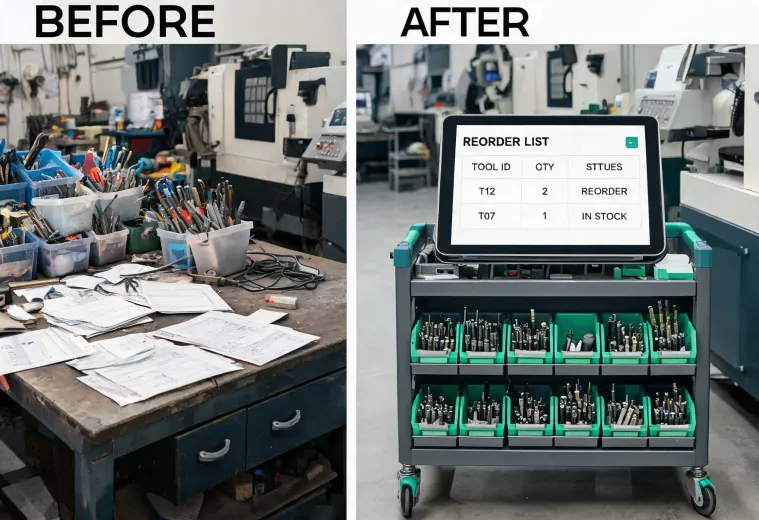
Savings model
Most waste hides in small decisions: a rush shipment because a holder was not reordered, duplicate inserts stocked under different labels, a machine accessory purchased without installation readiness, or a replacement item approved without checking the original equivalent. The Haas Automation review model asks buyers to capture four numbers before release: expected annual usage, reorder frequency, emergency freight exposure, and downtime risk. The model is not a promise of savings; it is a discipline for making the hidden cost visible before the order leaves purchasing.
Estimate machine hours, tool-change frequency, and active part families.
Define which items are consumable, critical spare, accessory, or capital equipment.
Flag emergency freight, downtime exposure, and approved-equivalent sensitivity.
Release a table with triggers, owners, and documentation requirements.
Operational examples
A buyer reduced duplicate insert families by mapping holders, materials, and operations into one reorder table. The result was less excess stock and fewer production conversations about which equivalent was approved.
A maintenance team avoided emergency shipments by defining spare kits and replacement intervals while the machine package was still being approved.
Receiving teams used serial references, accessory lists, and installation notes to prevent returns caused by incomplete shipment context.
Build the waste-control table
We will identify duplicate lines, emergency-shipment exposure, and documentation gaps that can be fixed before your next purchase cycle.